
The Plant
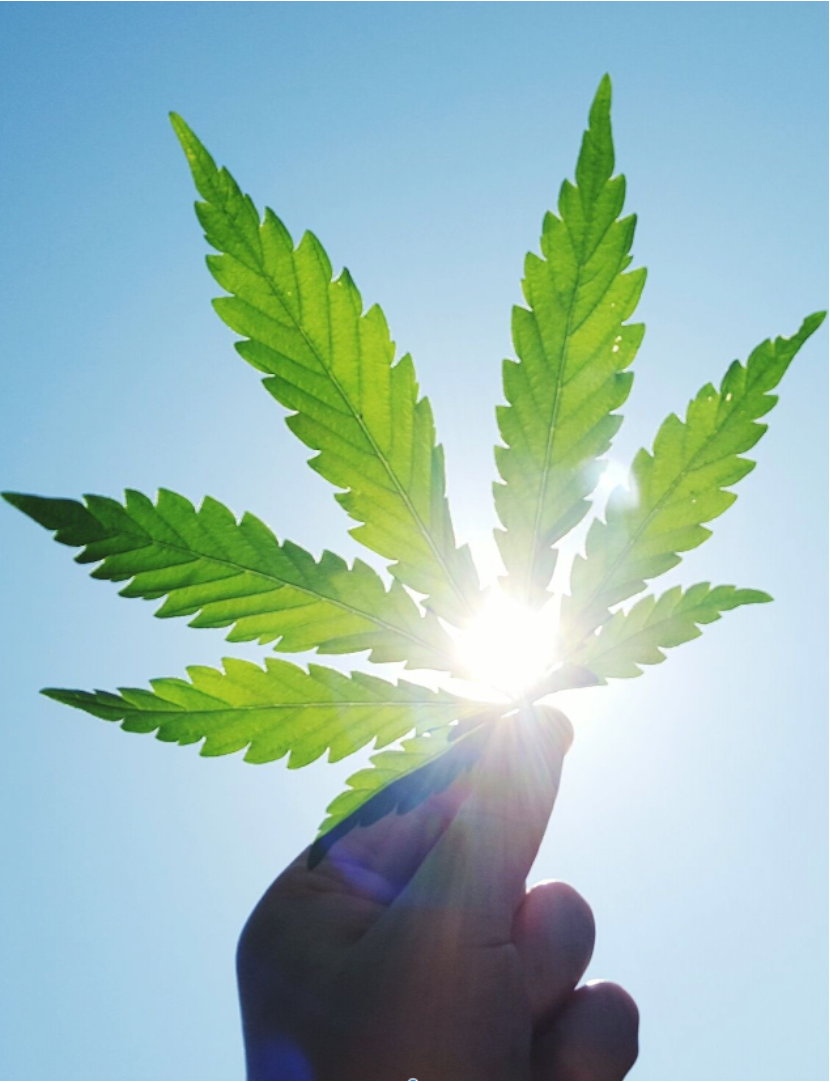
Cannabis is a flowering plant that has been cultivated for thousands of years. Modern cannabis sold in licensed dispensaries comes from Cannabis sativa L. — a species that encompasses what consumers historically called "indica," "sativa," and "hybrid." Current science suggests that the indica/sativa distinction reflects plant morphology more than reliable differences in effect; the compound profile (, , flavonoids) is a more useful predictor of individual experience.
A Brief History — and Documented Medicinal Value
Cannabis has been used in medicine and ritual for thousands of years across many cultures. Modern science has built on that tradition. Cannabis is not one medicine — it is a complex plant containing more than 80 biologically active compounds, including the cannabinoids THC and CBD. Each cannabinoid can interact with the body differently, which means the potential benefits and risks depend on the compound, dose, formulation, method of consumption, and the individual using it.
A Landmark in Cannabis Science
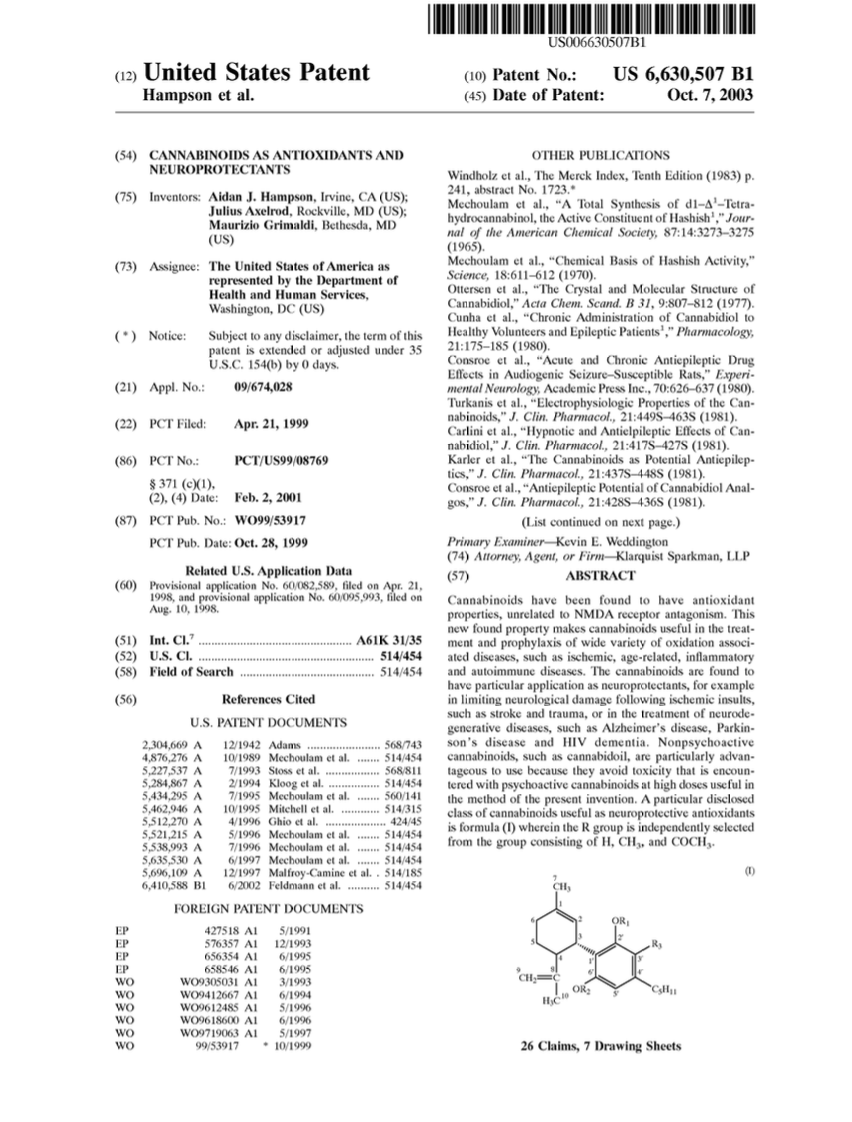
In 2003, the United States Department of Health and Human Services was awarded U.S. Patent 6,630,507, titled Cannabinoids as Antioxidants and Neuroprotectants. The research behind the patent found that cannabinoids — including CBD and THC — demonstrated antioxidant properties and helped protect nerve cells from oxidative and glutamate-related damage in laboratory and animal models. The researchers were especially interested in CBD because it produced these effects without the intoxicating experience associated with THC.
This patent represents an important milestone: federal scientists formally documented that compounds found in cannabis may have therapeutic value beyond producing a "high."
What Has Been Established in Patients
Since that patent was issued, certain cannabinoid-based medicines have met the FDA's standards for safety and effectiveness for specific medical uses:
- A purified form of CBD is FDA-approved to treat seizures associated with Lennox-Gastaut syndrome, Dravet syndrome, and tuberous sclerosis complex.
- Prescription medicines containing dronabinol, a form of THC, are approved for chemotherapy-related nausea and vomiting and for appetite loss associated with AIDS.
- Nabilone, a synthetic cannabinoid similar to THC, is approved for chemotherapy-related nausea and vomiting.
- Research suggests that certain cannabis or cannabinoid formulations may provide modest short-term relief for some types of chronic pain and multiple sclerosis symptoms.
Researchers continue to investigate cannabinoids for inflammation, neurological injury, anxiety, sleep, and neurodegenerative diseases. Much of this research remains preliminary, and laboratory or animal findings do not automatically establish that a treatment will work in people.
The Endocannabinoid System
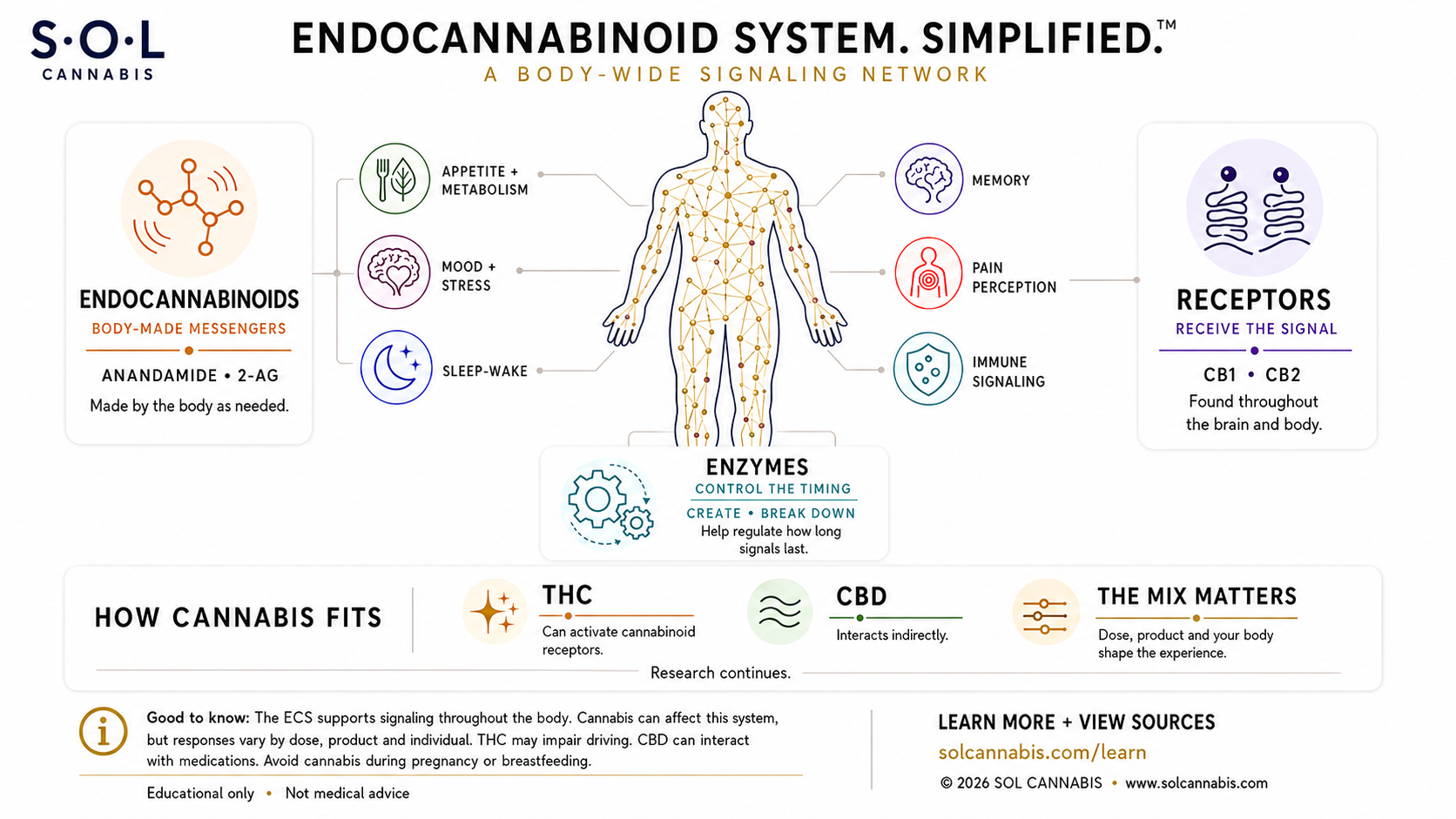
The body produces its own cannabis-like compounds — called . These interact with a network of receptors — primarily CB1 (found mainly in the brain and central nervous system) and CB2 (found mainly in the immune system and peripheral tissues). THC binds to CB1 receptors, which is why cannabis affects perception, memory, and mood. CBD interacts with the system differently, without directly binding to CB1 receptors in the same way.
Major Cannabinoids
The cannabis plant contains dozens of cannabinoids. The most studied are described below.
THC (Delta-9-tetrahydrocannabinol)
The primary psychoactive compound. Responsible for the "high." Potency is measured as a percentage of total THC content.
CBD (Cannabidiol)
Non-intoxicating. May interact with the ECS in ways that some users find calming, though research is ongoing.
CBG (Cannabigerol)
Often called a "precursor" cannabinoid; present in smaller amounts. Research is early-stage.
CBN (Cannabinol)
Formed as THC ages or degrades. Some preliminary research suggests possible sedating properties at higher doses.
THCV (Tetrahydrocannabivarin)
Structurally similar to THC; effects and potency differ. Research is limited.
Explore at SOL Cannabis
Next Step
Next: Cannabinoids & Terpenes →Reviewed by: SOL Education Team.
Sources
- [Peer-reviewed]Russo EB. Taming THC: potential cannabis synergy and phytocannabinoid-terpenoid entourage effects. Br J Pharmacol. 2011.
- [Government source]National Institute on Drug Abuse — What is marijuana? (2024)
- [Government source]Maryland Cannabis Administration (2023)
- [Government source]U.S. Patent 6,630,507 — Cannabinoids as Antioxidants and Neuroprotectants (U.S. Dept. of Health and Human Services, 2003)
- [Peer-reviewed]Hampson AJ et al. — Cannabidiol and (−)Δ9-tetrahydrocannabinol are neuroprotective antioxidants. PNAS 1998.
- [Government source]FDA — Cannabis and Cannabis-Derived Products Q&A
- [Government source]NIH/NCCIH — Cannabis, Marijuana and Cannabinoids: What You Need to Know
Continue Learning
Start Here
Maryland Cannabis Purchase Limits & ID Requirements
What you can buy per visit, accepted ID types, medical vs. adult-use limits, and what to expect at the register.
5 min read
Cannabinoids & Terpenes
Cannabinoids: THC, CBD and More
Understand the major and minor cannabinoids, what labels can and cannot tell you, and how to read evidence responsibly.
10 min read
Cannabinoids & Terpenes
We ❤ Terpenes
What terpenes are, why they matter, and a guide to the five most common ones found at SOL.
7 min read